Ghana’s historic triumph at the 2026 Amputee Football World Cup should represent more than a sporting achievement. It should serve as a powerful reminder of the extraordinary potential of persons with physical disabilities and the need for society to create more opportunities for them to excel.
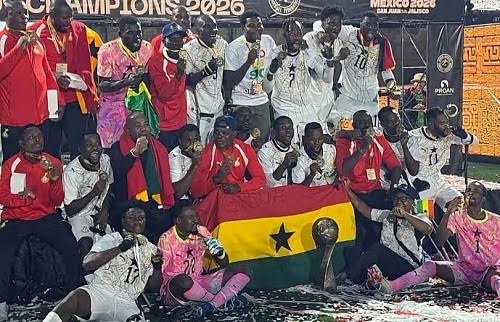
The Black Challenge have conquered the world, defeating Morocco 1-0 in the final of the tournament in Mexico to become Amputee Football World Cup champions for the first time in the country’s history.
For a team that has overcome several physical, social and financial challenges to reach the summit of world football, the achievement is a remarkable statement of resilience, determination and the human capacity to overcome adversity.
Yet, beyond the celebrations, national pride and historic recognition, Ghana must confront an important question: what happens after the trophies have been lifted?
Will the success of the Black Challenge translate into better opportunities, improved support systems and greater inclusion for persons living with physical disabilities across the country?
Or will the players return to the same society where many physically impaired people continue to struggle for recognition, employment, accessibility and equal opportunities?
The Black Challenge have demonstrated that physical impairment should never be a barrier to ambition, excellence or national contribution. Their achievement must now inspire a broader conversation about inclusion and equal opportunities in Ghana.
From difficult beginnings to world champions
Ghana’s journey to becoming world champions was anything but straightforward.
Stephen Richard Obeng’s side endured a difficult start to their campaign, suffering a 2-0 defeat to Angola before settling for a 1-1 draw against Colombia.
With their qualification hopes hanging in the balance, the Black Challenge needed a strong response in their final group fixture.
They delivered emphatically, recording a convincing 6-0 victory over Iraq to finish second in their group and secure a place in the knockout stages.
Their momentum continued in the Round of 16, where they defeated the United States 3-1.
Mohammed Mubarik scored twice, while Hamza Mohammed added the other goal to send Ghana into the quarter-finals.
The Black Challenge subsequently eliminated Egypt before producing one of their biggest performances of the tournament against defending champions Türkiye in the semi-finals.
After a 1-1 draw, Ghana prevailed 4-3 on penalties to reach the final for the first time.
Standing between them and history was Morocco.
However, a second-half own goal from a Moroccan defender, following an effort from Ghana captain Richard Arthur Opentil, secured a 1-0 victory and handed Ghana its maiden Amputee Football World Cup title.
From an opening defeat to lifting the ultimate prize, the Black Challenge demonstrated the importance of resilience, teamwork, discipline and an unwavering belief in one’s ability.
Disability is not inability
Perhaps the most important message from Ghana’s triumph is that disability should never be confused with inability.
For too long, persons with physical disabilities have faced societal attitudes that limit their potential, with many treated as people who need sympathy rather than individuals who deserve equal opportunities to contribute and succeed.
The Black Challenge have challenged that perception on the biggest stage.
Their performances in Mexico have shown that physical impairment does not diminish talent, competitiveness, ambition or the desire to achieve greatness.
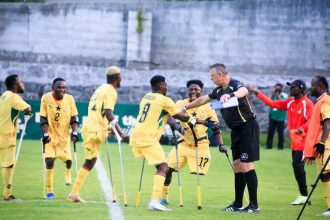
These players trained, competed, travelled and overcame some of the world’s best amputee football teams to become world champions.
They deserve to be celebrated not simply because they have physical disabilities, but because they are exceptional athletes who have achieved something extraordinary for their country.
Their success should encourage employers, educational institutions, sporting organisations and public institutions to reconsider how they accommodate and empower persons with disabilities.
Ghana must move beyond celebrating persons with disabilities only when they achieve something extraordinary. They deserve opportunities regardless of whether they win medals, trophies or international recognition.
The need for opportunities beyond sports
While the Black Challenge have made their mark through football, the conversation about inclusion must extend beyond the sporting arena.
Across Ghana, many physically impaired people continue to encounter barriers in accessing education, employment, healthcare, transportation and public infrastructure.
Some buildings remain inaccessible to wheelchair users, while public transport systems and workplace environments do not always adequately accommodate people with mobility challenges.
In the employment sector, qualified individuals with physical disabilities can also face unnecessary discrimination and limited opportunities because of assumptions about their capabilities.
This must change.
The government and private sector have a responsibility to create environments where persons with disabilities can compete fairly and contribute meaningfully to national development.
Educational institutions must also ensure that physical impairment does not prevent talented individuals from accessing quality education and developing their skills.
Beyond policies and public statements, inclusion must become visible in everyday decisions, infrastructure development, recruitment practices and the allocation of resources.
The success of the Black Challenge provides an opportunity to move this conversation from theory to action.
Invest in talent, not sympathy
The Black Challenge’s journey also exposes the importance of investing in sporting opportunities for persons with disabilities.
Their achievement did not happen overnight. It required preparation, commitment, technical guidance, institutional support and the determination of the players themselves.
However, Ghana cannot afford to wait until another major international competition before recognising the needs of para-athletes.
There must be sustained investment in disability sports, including improved training facilities, equipment, coaching, competitive opportunities and financial support.
Corporate Ghana also has an important role to play.
Businesses should look beyond occasional donations and consider long-term partnerships with disability sporting organisations. Sponsorships, employment opportunities, scholarships and development programmes can make a meaningful difference.
The recent support from Gold Fields Ghana, which committed US$8,000 to each member of the Black Challenge delegation following the emergence of concerns over outstanding entitlements, also highlights the importance of corporate involvement in supporting athletes.
Such interventions are valuable, but they should form part of a broader and sustainable commitment to disability sports.
Most importantly, persons with disabilities must be included in decision-making processes that affect their lives. They should not simply be recipients of support but active participants in shaping policies and programmes designed for their advancement.
A world title must become a national turning point
Ghana has every reason to celebrate the Black Challenge.
They have achieved what many national teams only dream of, bringing home a global title and placing the country’s name at the summit of amputee football.
But the greatest legacy of this triumph should not be limited to the trophy or the recognition that comes with being world champions.
It should be measured by the opportunities created for the next generation of physically impaired Ghanaians.
A young person who loses a limb should still be able to dream of becoming a footballer, journalist, doctor, teacher, entrepreneur or public servant without feeling that their physical condition has determined their future.
The Black Challenge have shown that limitations should not define potential. Society must now create the conditions for that potential to flourish.
Their victory over Morocco should therefore be more than a moment of national celebration. It should be a wake-up call for Ghana to build a society where inclusion is practised, accessibility is prioritised and opportunities are available to all.
The Black Challenge have conquered the world. It is now Ghana’s responsibility to ensure that their triumph opens doors for millions of others who deserve the opportunity to prove what they can achieve.