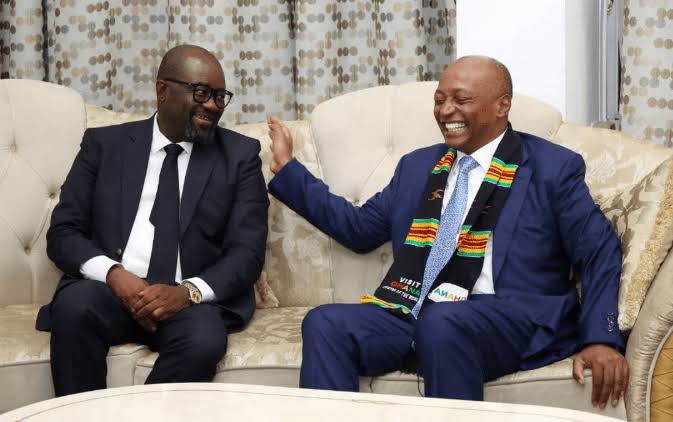
The Ghana Football Association (GFA) is set to benefit from a significant financial boost following the Confederation of African Football’s (CAF) decision to increase its annual financial support to member associations from $525,000 to $700,000.
The latest adjustment, which took effect in July 2026, represents an additional $175,000 for each of CAF’s 54 member associations and a 250% increase in annual allocations since 2021.
The increment was highlighted at CAF’s 48th Ordinary General Assembly in Abuja, Nigeria, as president Patrice Motsepe continues efforts to improve the financial capacity of football associations across the continent.
For Ghana, the revised allocation means the GFA will receive $700,000 annually, compared with the $200,000 it received in 2021.
This represents an increase of $500,000, or 250%, in annual financial support.
The latest adjustment alone gives Ghana an additional $175,000 every year, representing a 33.3% increase on the previous allocation of $525,000.
At an indicative exchange rate of GH¢11 per dollar, the new allocation would be worth approximately GH¢7.7 million annually, compared with GH¢5.775 million under the previous arrangement.
This means the GFA could receive an additional GH¢1.925 million from the latest increase, although the actual cedi value will depend on the prevailing exchange rate when the funds are converted.
How much more will Ghana benefit?
CAF’s financial support to its member associations has increased in stages since 2021.
The annual allocation, which initially stood at $200,000 per federation, was subsequently increased to $400,000 before rising to $525,000.
The latest increase to $700,000 means the GFA will receive three and a half times its original allocation in 2021.
Across the 54 member associations, CAF’s annual financial commitment has now increased from $10.8 million in 2021 to $37.8 million in 2026.
The additional funding is expected to help national associations strengthen football administration, improve governance and expand development programmes.
For the GFA, the increased allocation could provide additional financial resources for grassroots football, youth development, women’s football, coaching education and the development of referees.
It could also help support the administration of domestic competitions and improve the association’s capacity to invest in football development across the country.
However, the actual impact on Ghanaian football will depend on how effectively the GFA utilises the additional resources.
CAF targets $1 million annually for each association
The latest increase brings CAF 70% of the way towards its target of distributing $1 million annually to each of its 54 member associations.
The target forms part of Motsepe’s broader financial support programme, which seeks to give national federations greater financial stability and improve their ability to develop football.
CAF has also increased its annual financial allocations to its six Zonal Unions by 80%, from $500,000 in 2021 to $900,000 in 2026.
The regional bodies, including the West African Football Union (WAFU), play an important role in organising competitions and coordinating football development activities across their respective zones.
African club football receives bigger investment
Beyond national associations and Zonal Unions, CAF has also increased its financial commitment to continental club football.
Investment and prize money allocations for African club competitions have risen by 153% since 2021, increasing from $19 million to $48 million.
The additional $29 million is expected to improve the financial rewards available to clubs participating in CAF competitions and strengthen the commercial appeal of African football.
For Ghanaian football, the increased allocations to national associations and clubs could provide further opportunities to strengthen the domestic game and improve the competitiveness of African teams.
With the GFA now entitled to $700,000 annually, Ghana is among the beneficiaries of CAF’s expanded financial support programme, as the continental governing body moves closer to its $1 million annual funding target for every member associations.