
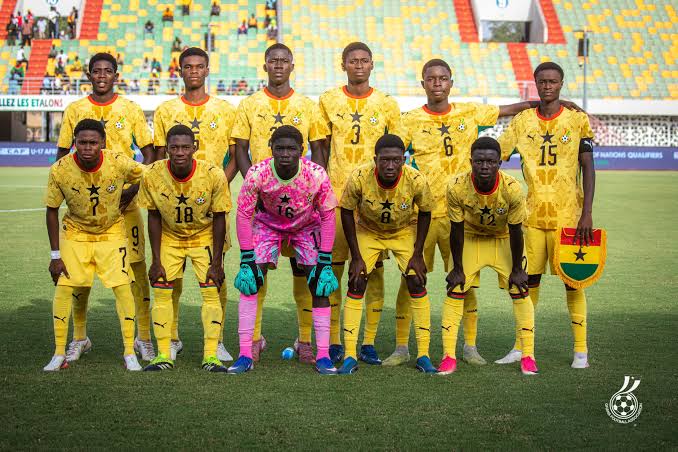
Ghana’s failure to qualify for another U-17 Africa Cup of Nations has deepened concerns about the decline of the country’s youth football system, with the Black Starlets now facing a prolonged absence from the continent’s biggest age-group competitions.
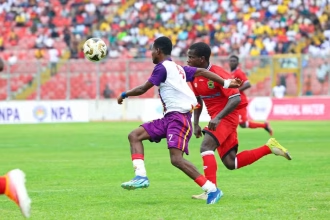
The 1-0 defeat to Ivory Coast in the semi-finals of the 2026 WAFU Zone B U-17 Championship has ruled Ghana out of the 2027 U-17 Africa Cup of Nations in Morocco and ended their hopes of qualifying for the FIFA U-17 World Cup through the tournament.
It is another painful setback for a country that once set the standard for youth football in Africa and earned global recognition for developing young talent.
Since their last appearance at the FIFA U-17 World Cup in 2017, Ghana have failed to qualify for the subsequent editions in 2019, 2023 and 2025. The latest setback extends that absence to the 2026 tournament.
The pattern is equally troubling at continental level, where Ghana have missed several editions of the U-17 AFCON, raising questions about talent identification, player development, coaching, investment and the structures responsible for preparing the next generation of Black Stars.
Ghana’s last appearance at the U-17 AFCON before their recent return was in Gabon 2017, when they reached the quarter-finals in Gabon. Their last FIFA U-17 World Cup appearance was also in 2017, in India, where they reached the quarter-finals before losing to Mali.
The two competitions have historically been important pathways for Ghanaian footballers, providing young players with international exposure and opportunities to progress to senior national teams and professional careers.
The Black Starlets won the U-17 AFCON in 1995 and 1999, while their triumphs at the FIFA U-17 World Cup in 1991 and 1995 established Ghana as one of the leading nations in youth football.
But the consistency that defined those generations has gradually disappeared.
Ghana failed to qualify for the 2019 U-17 AFCON in Tanzania and the 2023 edition in Algeria. They also missed the 2025 tournament in Morocco before returning to the continental competition in 2026.
The FIFA U-17 World Cup record is equally concerning. Ghana missed the 2019 tournament in Brazil, the 2023 edition in Indonesia and the 2025 competition in Qatar.
Their hopes of returning to the global stage in 2026 were also dashed after a dramatic defeat to Uganda.
At the 2026 U-17 AFCON in Morocco, Ghana narrowly missed out on the quarter-finals after finishing level on points with Algeria in Group D. Algeria advanced after the teams were separated by a drawing of lots, forcing Ghana into a play-off for one of Africa’s remaining World Cup places.
The Black Starlets appeared poised to qualify after taking the lead twice against Uganda, through Eric Adu Gyamfi and Abdul Latif Wunzalgu. However, a late penalty forced the game into a shootout after a 2-2 draw.
Uganda, led by former Ghana International and U-17 head coach, Laryea Kingston, eventually won 8-7 on penalties, condemning Ghana to another absence from the World Cup.
The disappointment illustrates how narrow the margins can be in youth football. Yet Ghana’s wider problem is not one defeat or one penalty shootout; it is the difficulty of consistently producing teams capable of qualifying for major competitions.
The defeat to Ivory Coast in the 2026 WAFU Zone B Championship semi-finals has now ruled Ghana out of the 2027 U-17 AFCON in Morocco.
It is another missed opportunity for a generation of players who would have benefited from competing against the continent’s best and testing themselves against international opposition.
The repeated failures raise questions about the effectiveness of Ghana’s youth development structures. Are young players receiving the right technical preparation? Are academies and grassroots programmes adequately supported? Is the transition from youth football to the senior game being managed effectively?
These questions require answers from the Ghana Football Association, coaches, academies and other stakeholders responsible for developing the game.
Qualification alone cannot measure the entire health of a youth football system. But repeated absences from major tournaments, particularly for a country with Ghana’s history, are difficult to dismiss.
Ghana’s youth football decline should not be treated as an isolated problem affecting the Black Starlets. It demands a broader assessment of talent identification, coaching education, competitive opportunities, infrastructure and investment in grassroots football.
The country has no shortage of young people who dream of becoming professional footballers. The challenge is creating a system that consistently turns that potential into technically accomplished, tactically intelligent and internationally competitive players.
The Black Starlets once gave Ghana a reputation that commanded respect across the world. Today, the country must confront the distance between that legacy and its recent results.
The task is not simply to qualify for the next tournament. It is to rebuild the foundations that made qualification a regular expectation rather than an increasingly elusive achievement.
For Ghana, the real test will be whether this latest disappointment becomes another missed opportunity or the turning point in rebuilding its youth football system.